
Ray The WhaleEnglish

How to build a sustainable English environment at home

A family English environment does not mean forcing every conversation into English. It means helping children meet English in familiar daily life and turning those moments into memory.

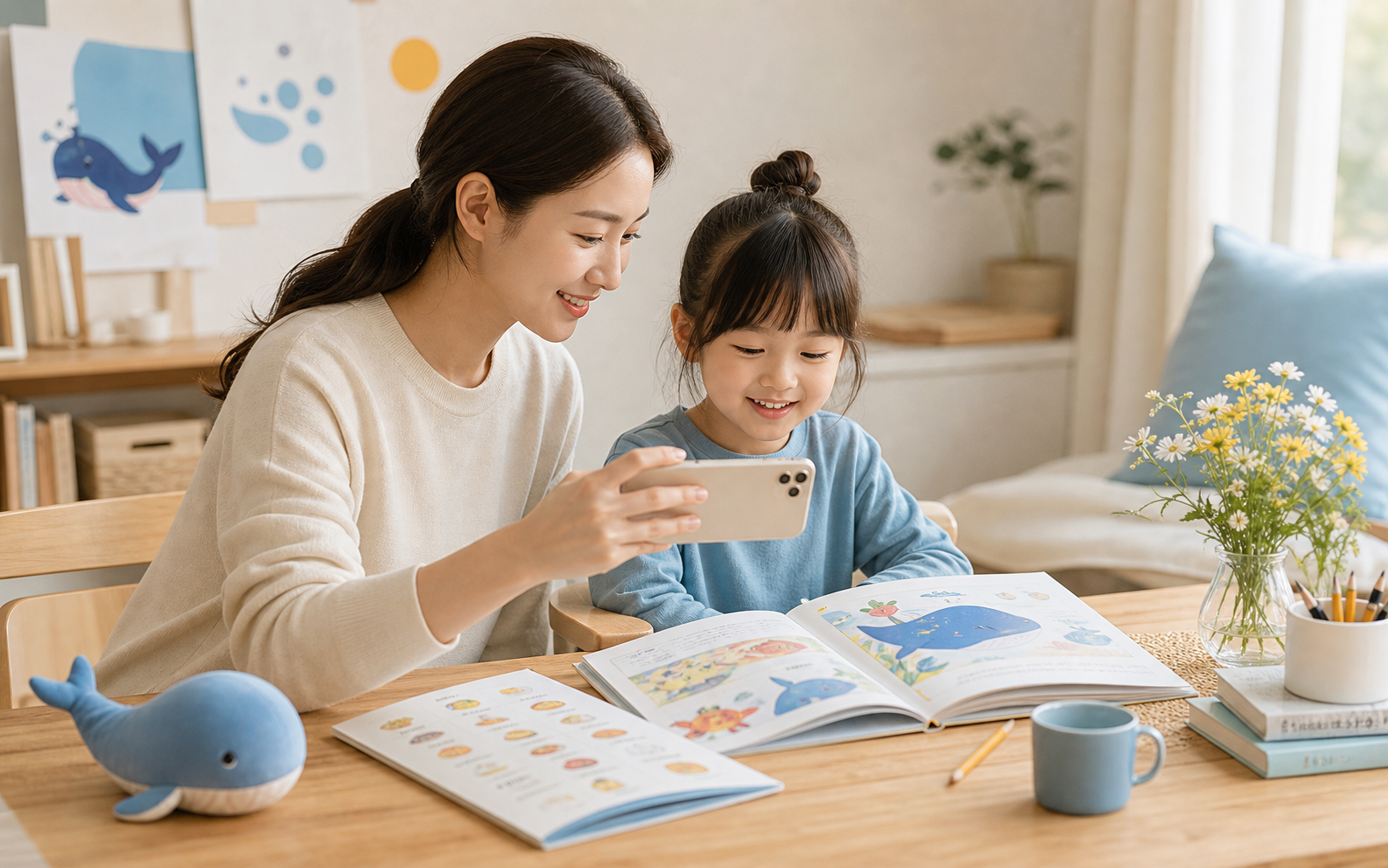
English story books and an iPad learning screen on a family desk

Start with English the child actually saw

The easiest input to sustain is often not a new textbook. It is the story book, menu, toy box or travel sign the child already met today.

These materials carry context and memory cues. Ray The Whale turns scattered English into words and sentences that can enter daily review.

Do not turn the home environment into pressure

Many parents assume an English environment means English-only conversation. That creates pressure for the parent and resistance for the child. A more sustainable approach keeps the home language rhythm while adding English around daily objects and activities.

  • Capture English when you see it
  • Spend 3 minutes reviewing today’s words before bed
  • Parents review and accompany instead of making materials every day

Turn input into long-term memory

English input disappears quickly if it is never seen again. Ray puts real-life English into a vocabulary system so children meet it tomorrow, next week and later in review.

Common questions

How much time does this take each day?+

Start with 3-5 minutes. The goal is not volume. The goal is a daily habit of revisiting real-life English.

Can parents use this if their own English is limited?+

Yes. Ray organizes the English first. Parents mainly choose scenes, review content and keep the rhythm with the child.